
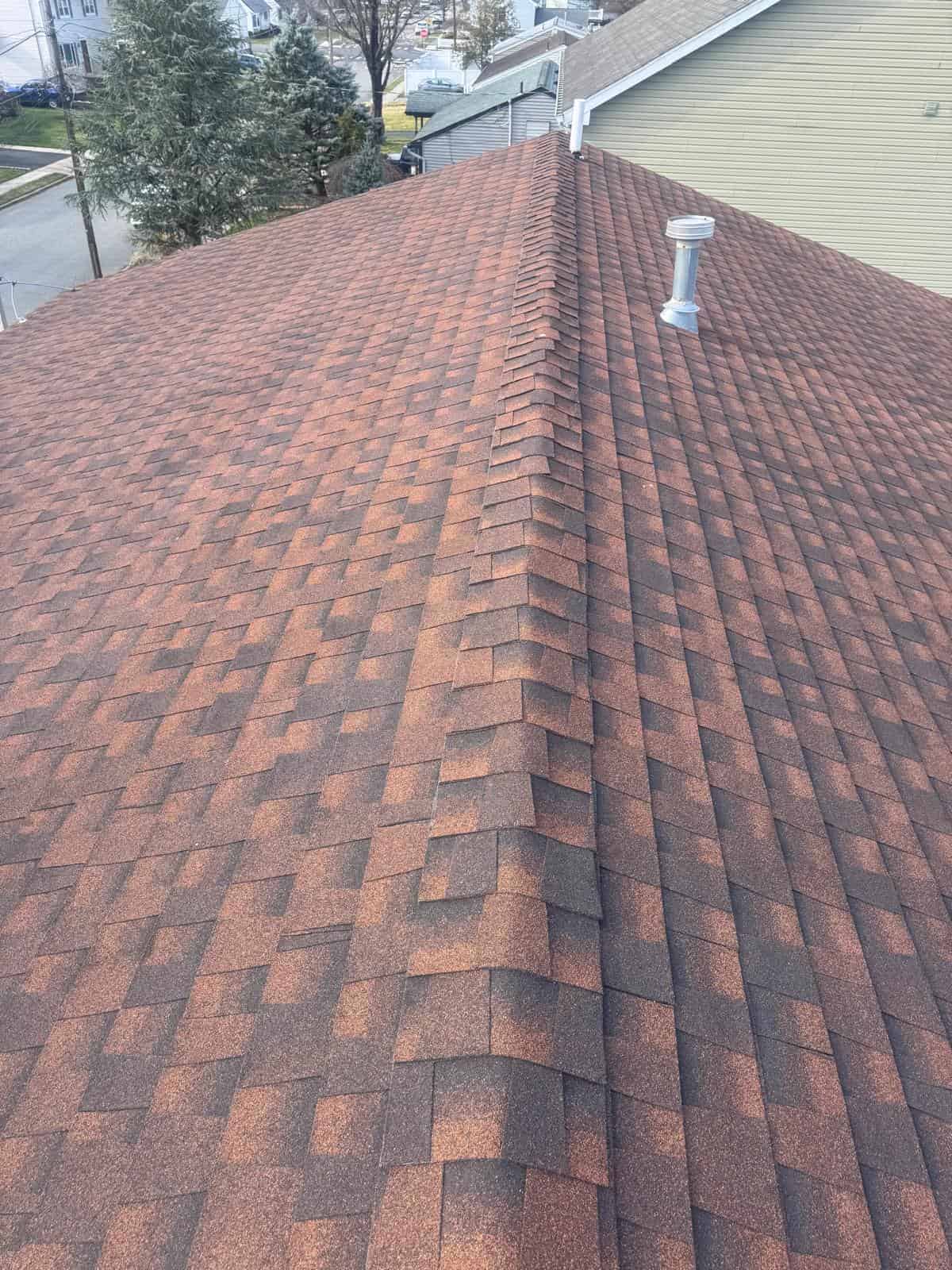
Short answer: the International Residential Code (section R806.2), which New Jersey’s residential building code is based on, sets a minimum of 1 square foot of net free vent area for every 150 square feet of attic floor. That can drop to 1 per 300 when 40 to 50 percent of the venting is high on the roof, within 3 feet of the ridge, and the rest is low, at or near the eaves. Good ventilation, together with air sealing and insulation, keeps the attic dry in winter and helps prevent ice dams and a rotting roof deck.
What does attic ventilation actually do?
It lets outside air move through the attic so moisture and heat don’t build up under the roof. In New Jersey, winter is when this matters most. Warm, humid air from the house leaks into the attic through gaps around lights, pipes and the attic hatch. When it hits the cold underside of the roof deck, it condenses, often as frost. According to the Building America Solution Center at Pacific Northwest National Laboratory, that moisture can lead to mold, rot, swelling and delamination of plywood or OSB, and corroded nails.
Heat leaking into the attic also warms the roof unevenly. Snow melts on the warm part of the roof and refreezes at the cold eaves, which is how ice dams form. The University of Missouri Extension points to these uneven roof temperatures as the root cause. Our guide to ice dams in New Jersey covers prevention in more detail.
How much ventilation does a roof need?
Start with the code ratio, then adjust for the roof. Here’s what the two ratios work out to for common attic sizes:
| Attic floor area | Minimum net free vent area at 1/150 | Minimum at 1/300 (40-50% of venting high, rest low) |
|---|---|---|
| 1,000 sq ft | About 6.7 sq ft | About 3.3 sq ft |
| 1,500 sq ft | 10 sq ft | 5 sq ft |
| 2,000 sq ft | About 13.3 sq ft | About 6.7 sq ft |
A few practical points:
- “Net free area” is not the size of the vent. Screens and louvers block part of the opening, so each vent is rated by its maker for how much open area it actually provides.
- Balance intake and exhaust. PNNL’s guidance says the vent area should ideally be split equally between intake (low) and exhaust (high), and exhaust should never exceed intake. Too much exhaust can pull conditioned air out of the house through ceiling leaks.
- Steep roofs may need more. PNNL notes that manufacturers suggest about 1.2 times the vent area for 7:12 to 10:12 pitches and 1.3 times for 11:12 and steeper.
- Keep the air path open. Baffles at the eaves keep insulation from blocking the soffit vents. PNNL recommends keeping 2 inches of airflow space between the roof deck and the top of the insulation.
What are the signs of poor attic ventilation?
| What you see | Where to look | What it can mean |
|---|---|---|
| Frost on the underside of the roof deck or on nail tips | Attic, on a cold morning | Warm, moist air is leaking in and not being vented out |
| Damp, matted or stained insulation, especially near the eaves | Attic floor | Condensation, a roof leak, or ice dam water |
| Dark staining, mold or soft spots on the sheathing | Attic ceiling | Moisture that has been there a while |
| Ice dams and heavy icicles along the gutters | Outside, after snow | Heat loss into the attic melting snow unevenly |
| Warped or rotted soffits and fascia, bubbled paint | Outside, under the eaves | Moisture problems at the roof edge (listed as warning signs by the U.S. Department of Energy) |
| Worn shingles along the roof edges | Outside, from the ground | Another warning sign DOE lists for attic moisture problems |
If you’d rather not go into the attic yourself, a roof inspection should include it. See what a roof inspection costs and what’s checked.
What types of roof vents are there?
- Soffit vents (intake) sit under the eaves and let cooler outside air in low.
- Ridge vents (exhaust) run along the peak and let warm, moist air out high. The U.S. Department of Energy’s consumer guide to durable attics recommends pairing soffit vents with a ridge vent, with baffles or rafter vents to keep the air path clear.
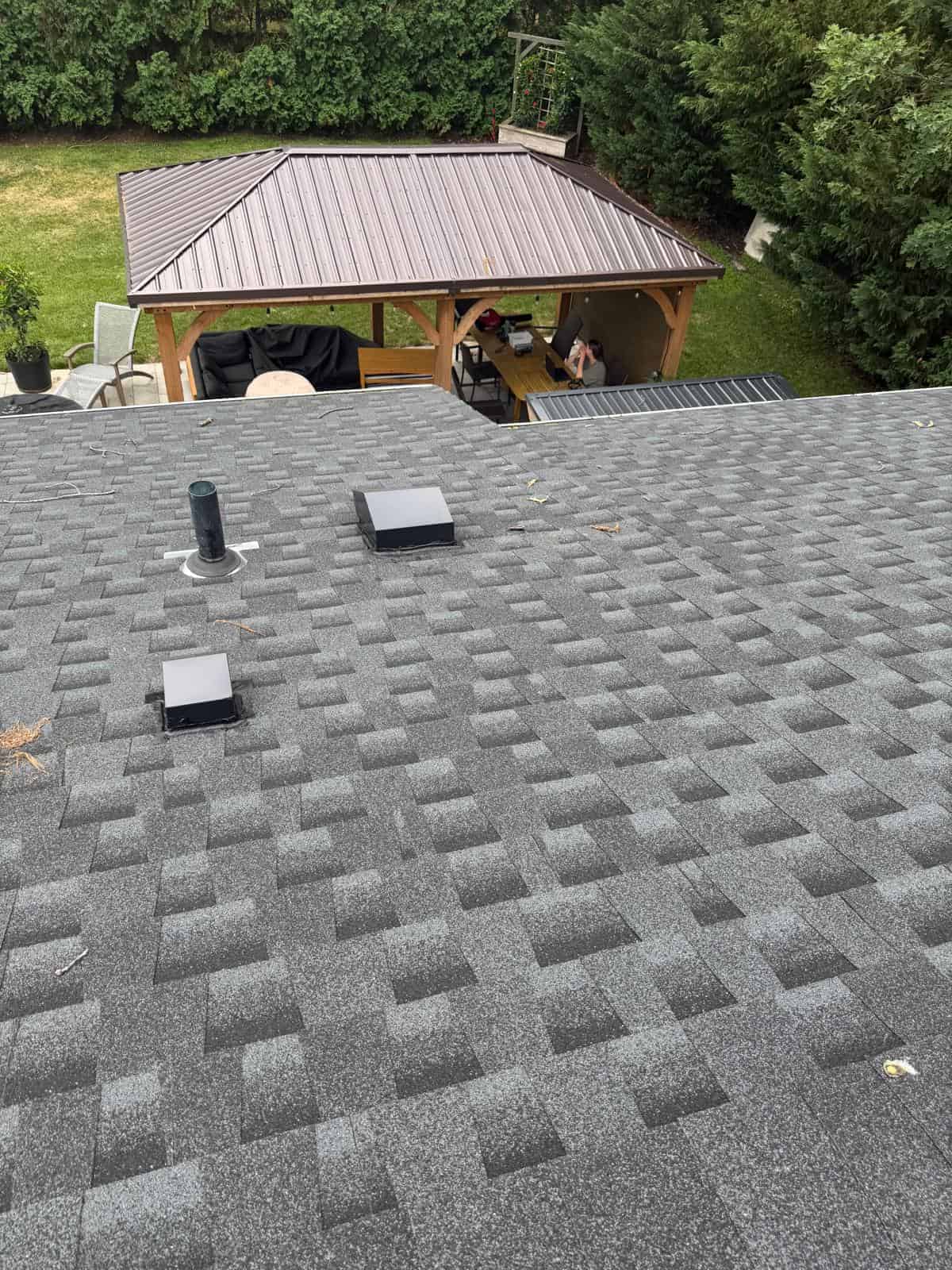
- Box vents (exhaust) are square or rectangular caps near the top of the roof, like the ones in the photo above.
- Gable vents are louvers in the end walls of the attic, common on older homes.
Is more ventilation always better?
No. Ventilation dries the attic out, but it doesn’t stop moisture from getting there. PNNL says air sealing at the ceiling is the best opportunity to limit condensation in an existing home. In practice, the fix is usually a combination:
- Seal air leaks around plumbing vents, wiring, recessed lights, chimneys and the attic hatch.
- Vent fans outdoors. DOE says bathroom fans, kitchen ranges and dryers should vent outside, not into the attic.
- Insulate well. University of Missouri Extension recommends ceiling insulation of R-38 to R-49 to help prevent ice dams.
- Watch indoor humidity. PNNL notes most sources recommend 30% to 50% relative humidity during the heating season.
Can attic ventilation be fixed during a roof replacement?
Yes, and it’s the easiest time to do it. With the old shingles off, a ridge vent can be cut in along the peak, old exhaust vents can be removed or replaced, and intake at the eaves can be checked. Fixing ventilation is also part of protecting your investment: a damp attic shortens the life of the roof deck and shingles. See how long a roof lasts in New Jersey, and if you’re planning work this season, whether a roof can be replaced in winter.
Frequently asked questions
Should I close my attic vents in winter?
No. Winter is when vents do their most important job, drying out moisture that leaks up from the house. Closing them makes condensation and frost more likely.
Can a bathroom fan vent into the attic?
It shouldn’t. DOE says bathroom fans should vent outdoors, and that venting them into the attic can cause mold and may violate local building codes.
Can poor ventilation cause a roof leak?
It can look like one. Frost on the roof deck melts on a mild day and drips onto the insulation and ceiling. Our guide to roof leaks in winter explains how to tell the difference.
Worried about moisture in your attic?
We’ll check your roof, vents and attic and tell you plainly what’s causing the problem and what it takes to fix it. Better Build Construction serves homeowners across North and Central New Jersey. Call (201) 598-0336 or request a free quote. Learn more about our roof replacement service and roof leak repair.
About Better Build Construction
This guide was written by the roofing team at Better Build Construction, a family-owned roofing and exterior contractor based at 50 Lisbon St, Clifton, NJ 07013. We repair and replace roofs, flat roofs, siding and skylights for homes and businesses across North and Central New Jersey, with 24/7 emergency service. Licensed and insured. NJ HIC Reg. #13VH10432600
Sources: International Code Council, IRC Section R806 (roof ventilation); Pacific Northwest National Laboratory, Building America Solution Center, “Condensation Control in Attics and Roofs in Cold Weather”; U.S. Department of Energy, “Consumer Guide to Durable Attics”; University of Missouri Extension, “Ice dams on the roof can damage your home”; New Jersey Department of Community Affairs, current construction codes.

2 thoughts on “How Much Attic Ventilation Does a Roof Need? Signs of Poor Ventilation in NJ Homes”