
Short answer: catch the water, protect your belongings, take photos, and call a roofer. Don’t climb onto an icy roof yourself. Most winter leaks in New Jersey come from one of three things: ice dams pushing meltwater under the shingles, frost in the attic melting on a mild day, or a failed seal at flashing, a vent pipe or damaged shingles. Where the water shows up, and when, usually tells you which one it is.
What should I do first when my roof leaks in winter?
- Contain the water. Put buckets or towels under the drip and move furniture, electronics and rugs out of the way.
- Be careful with electricity. If water is coming through a light fixture or near outlets, stay away from it and turn off that circuit at the breaker only if you can reach the panel safely and dry.
- Look in the attic if you can get there safely. Note where the water is coming in, whether there’s frost on the underside of the roof, and whether insulation is wet.
- Take photos and notes of the leak, the ceiling, and anything visible outside, like icicles or missing shingles. They help with diagnosis and with an insurance claim.
- Stay off the roof. The University of Missouri Extension notes that working on or below an icy roof is dangerous and recommends hiring professionals.
- Call a roofer. If water is coming in steadily, ask for emergency service so the roof can be tarped or temporarily sealed.
What causes a roof to leak in winter?
| Likely cause | Typical clues | Usual fix |
|---|---|---|
| Ice dam | Leak near an outside wall or along the eaves, during or after snow and a thaw; thick ice and icicles at the gutters | Clear snow from the lower roof, open drainage channels; long term, air seal, insulate and ventilate the attic |
| Attic condensation or frost | Wet spots in several places on a mild day after a cold snap; frost on nails or the roof deck; no visible roof damage | Seal air leaks into the attic, vent bath and kitchen fans outdoors, improve ventilation |
| Flashing at a chimney, skylight or wall | Leak near the chimney, skylight or where a roof meets a wall | Repair or replace the flashing |
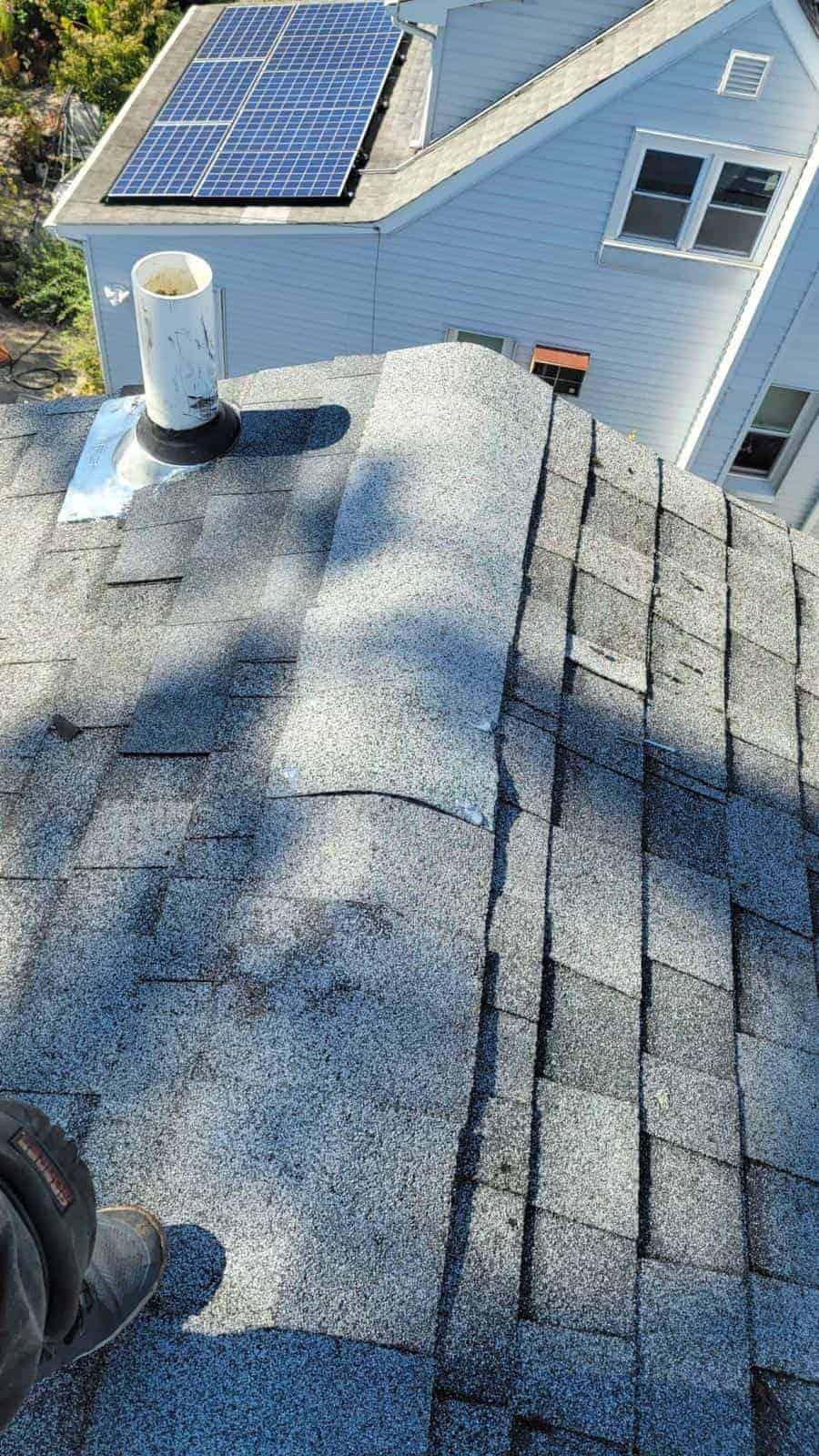
| Vent pipe boot | Leak or stain below a plumbing vent | Replace the cracked rubber boot or flashing |
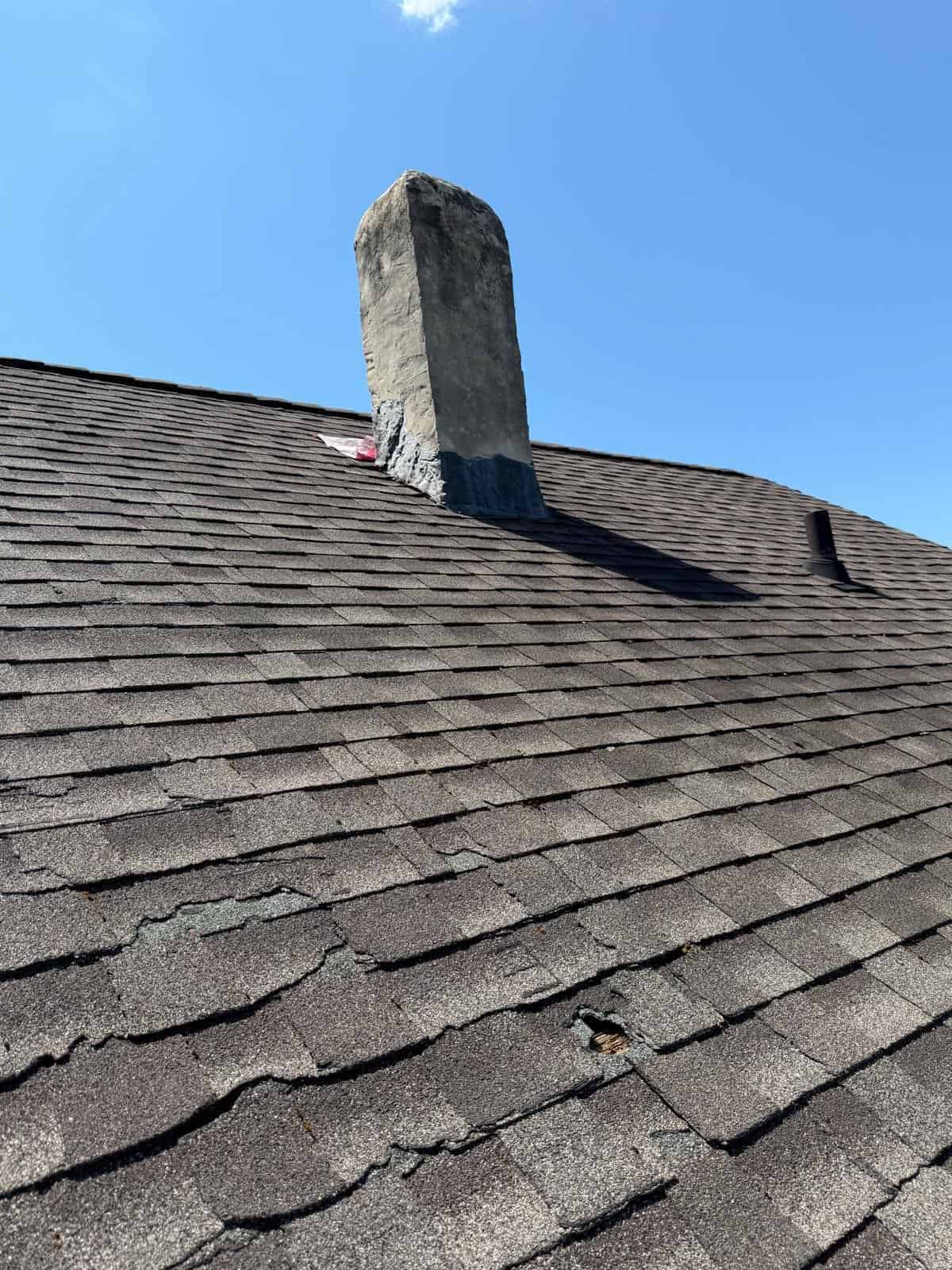
| Wind-damaged or missing shingles | Leak after a windstorm; shingles in the yard | Replace the shingles; tarp first if needed |
How can I tell if it’s an ice dam?
Look outside along the bottom edge of the roof. A ridge of ice at the eaves, with snow piled behind it and icicles hanging from the gutters, is the classic sign. The leak usually shows up on the ceiling or wall near the outside of the house, not in the middle of a room. Ice dams form when heat from the house melts snow on the upper roof and the water refreezes at the colder eaves, building a dam that can push water under the shingles.
For short-term relief, Missouri Extension suggests removing snow from the roof with a roof rake or push broom (we recommend working from the ground, never on an icy roof), and cutting channels through the dam with warm water, starting at the lower edge, though it notes those channels stop working within days. Don’t chop at the ice with a hammer or shovel; you’re likely to damage the shingles. For prevention, see our guide to ice dams in New Jersey.
Could it be condensation instead of a leak?
Yes, and it’s often mistaken for one. Warm, humid air from the house leaks into the attic, hits the cold roof deck and condenses, often as frost. According to Pacific Northwest National Laboratory’s Building America Solution Center, frost itself generally isn’t harmful, but it turns to water when the weather warms. That’s why “leaks” sometimes appear on a sunny day with no rain at all.
The fix isn’t roof repair. It’s stopping warm air from getting into the attic and making sure the attic is vented. The U.S. Department of Energy also says bathroom fans, kitchen ranges and dryers should vent outdoors, not into the attic. Our guide to attic ventilation covers the details.
Can a roof be repaired in winter?
Yes. Many repairs can be made in cold weather on a clear, dry day, such as replacing a cracked vent boot, resealing flashing or replacing blown-off shingles. When a full repair has to wait for better weather, a roofer can tarp or temporarily seal the area to stop the water. New shingles may need hand sealing in the cold, because the adhesive strip needs warmth to bond. If your roof is past saving, read whether a roof can be replaced in winter.
Will insurance cover a winter roof leak?
It depends on the cause and your policy. Many policies treat sudden damage, such as a tree limb or wind tearing off shingles, differently from wear and tear or long-term neglect. Read our guide to how homeowners insurance covers roof damage in NJ, and call your insurer before major repairs if you plan to file a claim. Keep receipts for any emergency tarping.
Frequently asked questions
Why does my roof only leak when snow melts?
That pattern points to an ice dam or to meltwater finding a weak spot, like worn flashing, that rain usually runs past. Snowmelt sits on the roof longer than rain, so small gaps show up.
Is a winter roof leak an emergency?
If water is coming in steadily, the ceiling is sagging, or water is near electrical fixtures, treat it as one. A slow drip that stops when the weather changes still needs a roofer soon, before the deck and insulation get soaked.
Should I put salt on my roof to melt an ice dam?
Avoid rock salt on the roof. It can damage plants below and metal flashing and gutters. Removing the snow from the lower roof and letting a professional deal with the ice is the safer route.
Roof leaking right now? We answer 24/7
Better Built Construction offers 24/7 emergency roof service across North and Central New Jersey, including Hackensack, Paramus and Teaneck. Call (201) 598-0336 or request a free quote. Learn more about our emergency roof repair and roof leak repair services.
About Better Built Construction
This guide was written by the roofing team at Better Built Construction, a family-owned roofing and exterior contractor based at 50 Lisbon St, Clifton, NJ 07013. We repair and replace roofs, flat roofs, siding and skylights for homes and businesses across North and Central New Jersey, with 24/7 emergency service. Licensed and insured. NJ HIC Reg. #13VH10432600
Sources: University of Missouri Extension, “Ice dams on the roof can damage your home”; Pacific Northwest National Laboratory, Building America Solution Center, “Condensation Control in Attics and Roofs in Cold Weather”; U.S. Department of Energy, “Consumer Guide to Durable Attics.”
1 thought on “Roof Leaking in Winter? What to Do Right Now and What’s Causing It”