
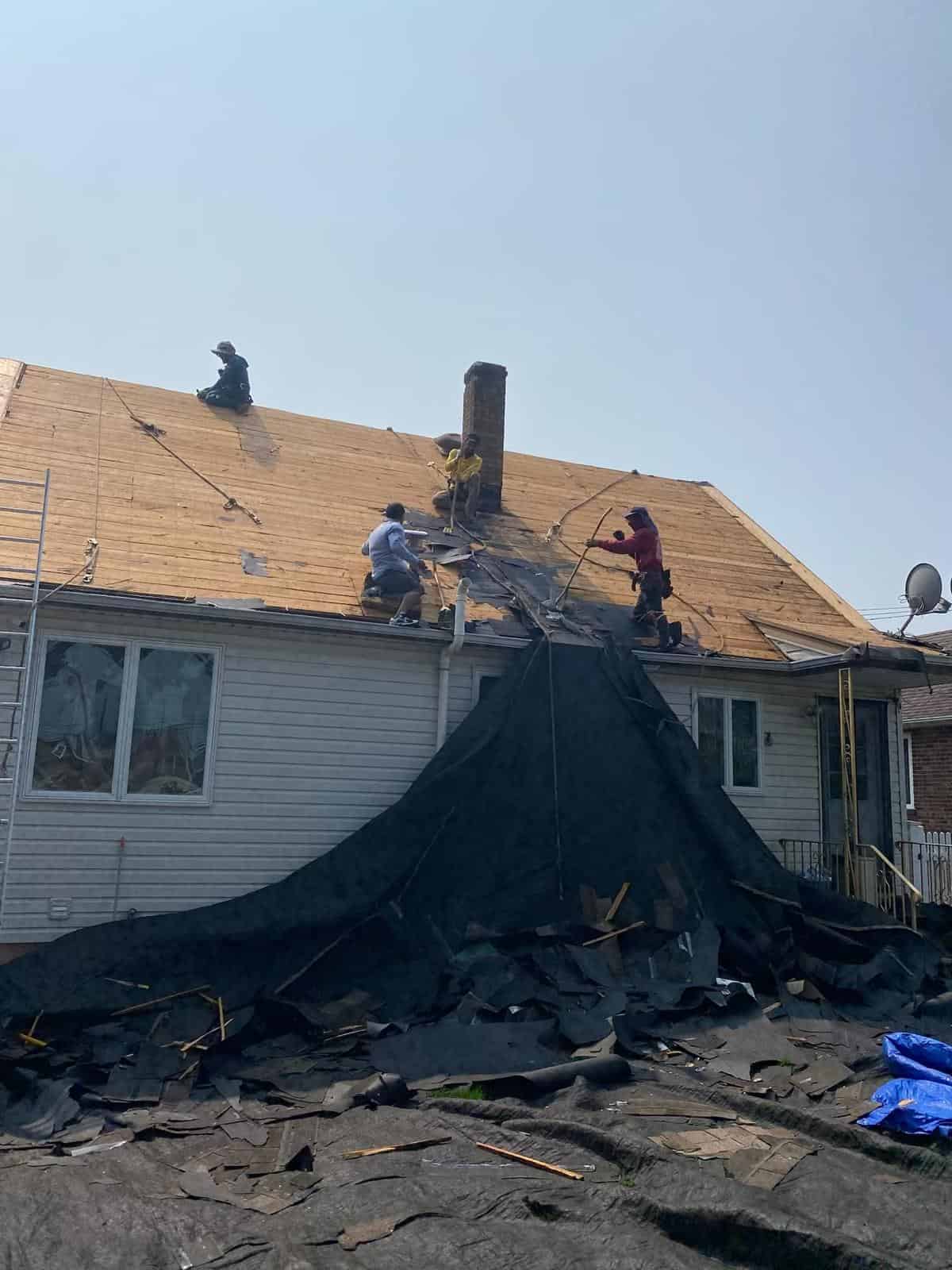
Short answer: yes, if the damage is sudden. A standard homeowners policy usually covers roof damage from wind, hail, a fallen tree, fire, or the weight of snow and ice. It usually does not cover a roof that is simply old, worn out or poorly maintained. How much you get depends on your deductible and whether your policy pays replacement cost or actual cash value for the roof. In New Jersey, a separate hurricane deductible only applies in a narrow situation set by state rules.
Every policy is different, so your declarations page and policy wording always have the final say. This guide explains how roof claims usually work in New Jersey and what to do in the first days after a storm.
What roof damage does homeowners insurance usually cover?
| Usually covered | Usually not covered |
|---|---|
| Shingles blown off or creased by high wind | Normal wear and tear from age |
| Hail damage | Slow leaks from neglected maintenance |
| A tree or large limb falling on the roof | Damage from clogged, neglected gutters |
| Fire, lightning and smoke | Flooding (needs a separate flood policy) |
| Weight of snow or ice | Earthquake |
| Vandalism | Old flashing or sealant that finally failed |
Based on typical homeowners policies as summarized by Policygenius. Check your own policy’s exclusions.
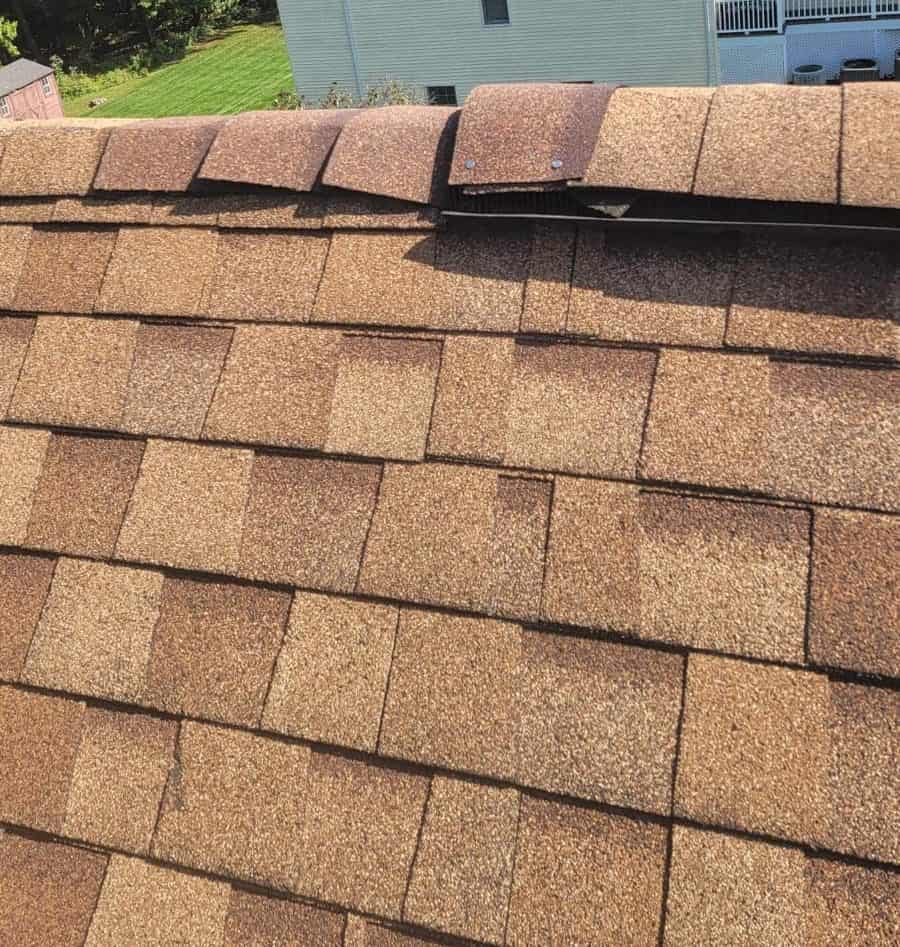
The key word is sudden. If a nor’easter rips shingles off a 10-year-old roof, that is a storm claim. If a 25-year-old roof has been slowly losing granules and starts leaking, the insurer will usually call it wear and tear.
Replacement cost vs. actual cash value: why roof age matters
Your policy pays for a roof in one of two ways:
- Replacement cost pays what it costs to replace the damaged roof today, minus your deductible.
- Actual cash value (ACV) pays replacement cost minus depreciation. On an older roof that can be a big cut. Policygenius gives the example of a 20-year-old roof with a 30-year life, where the payout is reduced by about two-thirds.
Some policies switch the roof to actual cash value once it reaches a certain age, often 15 or 20 years. Find out which one you have before a storm, not after. If you’re unsure how old your roof is or how long it should last, see how long a roof lasts in New Jersey.
How does the New Jersey hurricane deductible work?
Many New Jersey policies have a separate, higher hurricane deductible. Under state regulation N.J.A.C. 11:2-42.7, it can only apply to damage from a hurricane named by the National Weather Service when sustained hurricane-force winds of 74 mph or more have actually been measured in New Jersey. When that happens, it replaces your normal deductible for that storm.
That bar is high. After Hurricane Irene in 2011, the NJ Department of Banking and Insurance told insurers that no hurricane deductible should be applied, because those winds were not reported in the state. For most nor’easters, thunderstorms and windstorms, your regular deductible applies. Read your declarations page to see what your hurricane deductible is.
How to file a roof damage claim in NJ, step by step
- Stay safe and stay off the roof. Look from the ground and from inside. Check ceilings, the attic, and the yard for shingles or debris.
- Take photos and video of everything before anything is cleaned up or thrown away. Keep damaged materials until the insurer says you can discard them.
- Report the loss right away. Have your policy number ready, and write down the claim number and the adjuster’s contact details.
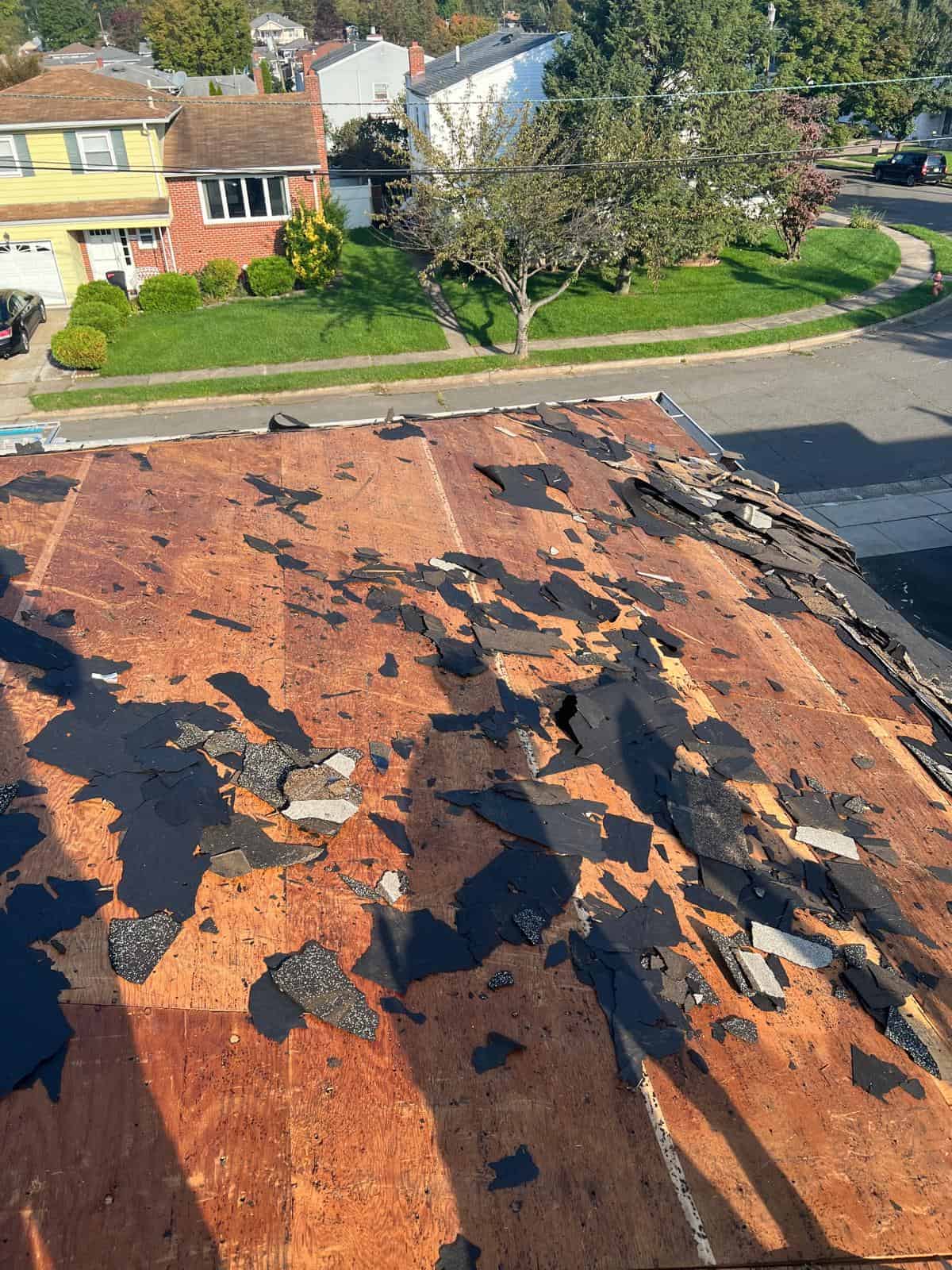
- Prevent more damage. Your policy expects you to protect the home, for example with an emergency tarp. Keep every receipt for temporary repairs.
- Get a roofer’s inspection and written estimate. Having it before the adjuster visits helps you compare what the insurer finds with what a roofer finds.
- Meet the adjuster, keep notes of every conversation, and ask for a copy of their damage estimate.
Steps based on the NJ Department of Banking and Insurance guide to insurance claims after a storm.
Do I have to use the insurance company’s contractor?
No. The NJ Department of Banking and Insurance says you are not required to use a contractor your insurer recommends. If you ask, the insurer must give you the name of a contractor who will do the work for the price in its estimate. You can choose your own roofer, as long as they are registered with the state. Here’s how to check a roofer’s registration in NJ.
Should I hire a public adjuster?
You don’t need one to file or settle a claim. Public adjusters are licensed by the state and negotiate the claim for you, usually for a percentage of the settlement. New Jersey requires their contract to list their services and a maximum fee. They can make sense for large, complicated losses. For a straightforward wind or hail claim, many homeowners handle it themselves with a roofer’s estimate.
What if my roof claim is denied or underpaid?
- Ask the insurer to explain in writing which policy wording excludes the damage. If any part is denied, they must explain how the policy excludes it.
- Compare their estimate line by line with your roofer’s. Missing items like underlayment, drip edge or flashing are common.
- If you can’t resolve it, call the DOBI Consumer Hotline at 1-800-446-7467 or file a complaint through the DOBI consumer assistance page.
Frequently asked questions
Will insurance pay for a whole new roof or just a repair?
It depends on how widespread the covered damage is. Insurers usually pay to repair the damaged area. If damage covers enough of the roof, or matching repairs aren’t possible, a full replacement may be approved.
Does insurance cover ice dam leaks?
Many policies cover sudden interior water damage from an ice dam, but not removing the ice or fixing the cause. See our guide to preventing ice dams in New Jersey.
How long do I have to file a roof claim?
Deadlines are set by your policy, so check it. Report damage as soon as possible. Waiting weeks or months makes it harder to prove the storm caused the damage.
Storm damage? Get a roof inspection and written estimate
We’ll inspect your roof, document what we find, and give you a clear written estimate you can share with your insurance company. For active leaks we offer 24/7 emergency roof repair. Call (201) 598-0336 or request a free quote.
About Better Build Construction
This guide was written by the roofing team at Better Build Construction, a family-owned roofing and exterior contractor based at 50 Lisbon St, Clifton, NJ 07013. We repair and replace roofs, flat roofs, siding and skylights for homes and businesses across North and Central New Jersey, with 24/7 emergency service. Licensed and insured. NJ HIC Reg. #13VH10432600. We’re roofers, not insurance agents or lawyers. For questions about your specific policy, ask your agent or insurer.
Sources: NJ Department of Banking and Insurance, “Insurance Claims After a Storm” and Bulletin No. 11-16; N.J.A.C. 11:2-42.7; Policygenius, “How to file a home insurance claim for roof damage.”
1 thought on “Does Homeowners Insurance Cover Roof Damage in NJ? Storm Claims Explained”