The short answer
- Repair when the damage is small and your roof still has years left. Replace when the roof is near the end of its life, leaks keep coming back, or the damage is widespread.
- The first thing to check is age. A standard 3-tab asphalt roof lasts about 20 years and an architectural asphalt roof about 30 (InterNACHI Life Expectancy Chart). A roof in the last few years of that range is usually a replace, even if the damage looks small.
- In New Jersey, ice dams, nor’easters, and freeze-thaw cycles wear roofs faster than the chart suggests, so local condition matters as much as age.
A shingle blows off in a storm, you spot a water stain on the ceiling, and the question lands fast: do you patch it or replace the whole thing? The roof repair vs replacement decision is the most common roofing call NJ homeowners face, and the wrong answer costs money either way. Repair a roof that’s done and you’ll pay twice. Replace one with years left and you spent thousands too early.
Here’s how to make the call the way an experienced roofer would, starting with the one number that settles most cases.
Roof repair vs replacement: start with the roof’s age
Age decides more repair-or-replace calls than damage does. A standard 3-tab asphalt shingle roof lasts roughly 20 years, and an architectural (dimensional) asphalt roof about 30 years, according to the InterNACHI Standard Estimated Life Expectancy Chart. Once a roof is within a few years of that mark, repairs stop being worth it.
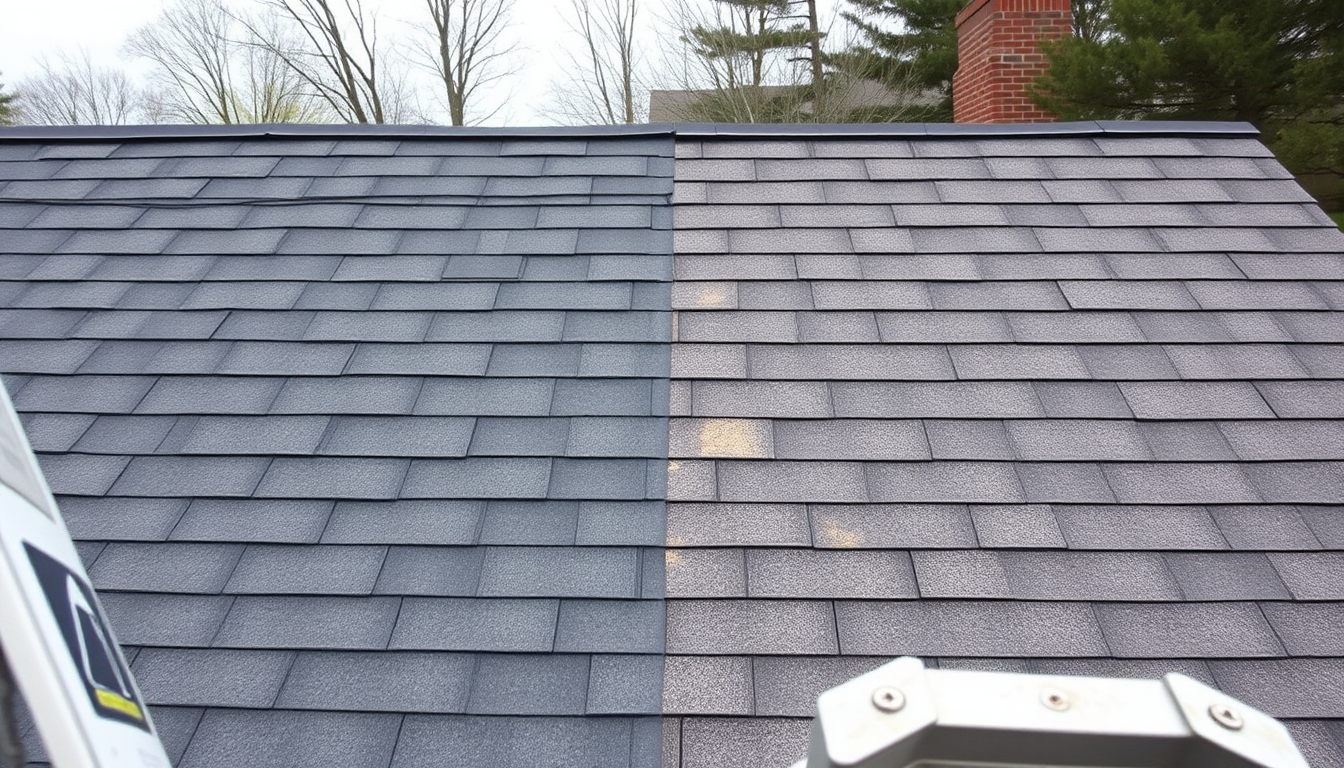
Why? Because old shingles are brittle. A patch on a 19-year-old roof might hold, but the shingles around it are already failing, so you’ll be back next season chasing the next leak. Roofs in the first half to two-thirds of their rated life are the good repair candidates.
Not sure how old your roof is? Check the closing documents from when you bought the house, or the permit record with your town. If a roofer can’t tell you the age, that’s a reason to get a second opinion before you spend.
| Roofing material | Typical lifespan (years) |
|---|---|
| Asphalt shingles, 3-tab | ~20 |
| Asphalt shingles, architectural | ~30 |
| Wood shakes | ~25 |
| Metal | 40 to 80 |
| Slate | 60 to 150 |
Source: InterNACHI Standard Estimated Life Expectancy Chart. Severe weather and poor ventilation pull these numbers down.
When is a repair the right call?
A repair makes sense when the damage is localized and the rest of the roof is sound. If your roof is in the first two-thirds of its life and the problem is one clear spot, fixing it is usually the smart, cheaper move. Most single-point leaks fall into this group.
Good candidates for a roof repair include:
- A handful of shingles blown off in a wind storm, on an otherwise healthy roof.
- A failed pipe boot, a cracked vent seal, or worn flashing (the metal that seals roof joints) around a chimney or skylight.
- A single leak with a clear source and no spreading stains.
- Minor granule loss in one area, not across the whole roof.
The test is simple. Is the damage one problem, or a symptom of a roof wearing out everywhere? One bad pipe boot on a 10-year-old roof is a repair all day. Curling and bald spots across the whole surface are not.
When is it time to replace the roof?
Replace the roof when repairs stop solving the problem. The National Roofing Contractors Association says it’s time to consider replacement when one or more of these is true: repair costs become excessive, leakage becomes intolerable, or damage is reaching the structural deck or your home’s interior finishes (NRCA reroofing guidelines). Any one of those is your signal.
In plain terms, lean toward a full roof replacement when you see:
- Age. The roof is within a few years of its rated lifespan (see the chart above).
- Repeat leaks. You’ve patched the same roof more than once and water keeps finding a new way in.
- Widespread wear. Curling, cracking, or bald (granule-free) shingles across the whole roof, not one corner.
- Sagging or soft deck. A dipping roofline or a spongy feel means the wood decking underneath is rotting. That’s structural, and patching won’t fix it.
- Daylight or moisture in the attic. Light through the boards, or damp insulation, means the roof system is failing.
There’s also a practical limit. Most building codes only allow two layers of shingles before a full tear-off is required, so if your roof already has two layers, a third “repair” layer usually isn’t legal or smart.
How does New Jersey weather change the decision?
New Jersey roofs age faster than a national chart suggests, because our weather is hard on them. The InterNACHI chart itself notes that severe weather shortens roof life (InterNACHI), and NJ delivers plenty of it. That’s why a 17-year-old roof here can be more worn than a 20-year-old roof in a mild climate.
The local stressors that push NJ roofs toward replacement:
- Ice dams. Snow melts, refreezes at the eaves, and forces water back up under the shingles. Repeated ice dams cause leaks that look like shingle problems but start at the edge.
- Freeze-thaw cycles. Water gets into tiny cracks, freezes, expands, and widens them. Over a NJ winter this happens again and again.
- Nor’easters and high wind. Coastal and inland storms lift and tear shingles, especially on older, brittle roofs.
- Snow load. Heavy wet snow stresses the deck and flashing, and finds any weak seam.
Older NJ housing stock adds to it. Homes built before about 1990 often have older felt underlayment that breaks down faster than modern synthetic. When the shingles on those homes reach end of life, the layer beneath usually needs replacing too.
What does a roofer actually check before deciding?
A real inspection looks past the shingles. The NRCA frames the replace decision around whether the roof system can still do its job (NRCA), and that means checking the parts you can’t see from the driveway. A good roofer evaluates the whole system, not just the spot that’s leaking.
On a proper inspection we check:
- The decking. Is the wood underneath solid or soft and rotted? Soft deck means replacement.
- Flashing and seals. Around chimneys, valleys, vents, and skylights, where most leaks actually start.
- Number of layers. One layer or already two?
- Ventilation. Poor attic ventilation cooks shingles from below and shortens roof life.
- Extent of wear. Is the damage one area, or is the whole field failing?
If you own a commercial building, the same logic applies but the systems differ. See our commercial roofing page for flat and low-slope specifics.
Get a straight answer before you spend
The honest truth is that some roofs are a clear repair, some are a clear replace, and a lot sit in the middle where it comes down to age, deck condition, and how many times you’ve already patched it. The only way to know for sure is to have someone get on the roof and into the attic.
Better Built Construction serves homeowners across Northern and Central New Jersey. If you’re weighing a repair against a replacement, request an estimate and we’ll give you the real picture, not a sales pitch. Not sure if you’re in our area? Check our service area.
Frequently asked questions
Is it cheaper to repair or replace a roof?
A repair is almost always cheaper up front. But on an old roof, repairs add up and you still end up replacing it. The NRCA advises replacement once repair costs become excessive or leaks keep returning (NRCA). On a young roof with one problem, repair is the better value.
How long does an asphalt roof last in New Jersey?
A 3-tab asphalt roof lasts about 20 years and an architectural asphalt roof about 30, per the InterNACHI Life Expectancy Chart. In New Jersey, ice dams, nor’easters, and freeze-thaw cycles often pull that toward the lower end, so local condition matters as much as age.
Can you just replace part of a roof?
Yes, a localized section can be repaired or partially replaced if the rest of the roof is sound and within its service life. But most building codes limit a roof to two shingle layers before a full tear-off is required, and color-matching old shingles is rarely perfect.
What are the signs I need a new roof, not a repair?
Widespread curling or bald shingles, repeat leaks, a sagging or spongy roofline, daylight in the attic, or a roof near its rated lifespan. The NRCA lists structural-deck damage and intolerable leakage as clear replacement triggers (NRCA).
Does homeowners insurance cover roof replacement in NJ?
Insurance often covers sudden storm or wind damage, but not wear and age. A roof failing from old age is a maintenance issue, not a claim. Document storm damage with photos and dates, and have a licensed roofer inspect before you file.