
Short answer: ice dams form when heat escaping from your house warms the roof, melts the snow, and the water refreezes at the cold edge of the roof. That ridge of ice traps more meltwater, which backs up under the shingles and leaks into ceilings and walls. The lasting fix is keeping the roof cold: seal air leaks into the attic, add insulation, and make sure the attic is ventilated. A self-adhering ice barrier under the shingles at the eaves protects the house if a dam forms anyway. Fall is the time to do this, not after the first big snow.
In North Jersey, ice dams usually show up after a snowfall followed by a few sunny days. Here’s why they happen, what to check this fall, and what to do if you already have one.
What causes ice dams?
An ice dam needs three things: snow on the roof, a warm spot on the roof above the eaves, and a cold eave edge. As Green Building Advisor explains, heat leaking out of the house warms the roof sheathing and melts the underside of the snow. The water runs down to the overhang, which sits outside the heated house and stays below freezing, so it refreezes. Day after day the ice grows into a dam, and the water behind it has nowhere to go but under your shingles.
That’s why ice dams are a heat problem first and a roofing problem second. Gutters don’t cause them, and neither do “bad shingles.”
Why do New Jersey homes get ice dams?
New Jersey winters swing above and below freezing. Snow sits on the roof, melts on a sunny afternoon, and refreezes at night. That freeze-thaw cycle is perfect for ice dams, and it happens more in the colder parts of the state, like Sussex, Warren and Morris counties.
House style matters too. Cape Cods, homes with finished attic rooms and knee walls, and roofs with dormers lose heat right where the roof meets the walls. Building scientists at UMass Amherst point out that there’s very little room for insulation where rafters sit on the exterior walls, and that ice dams also form below skylights because they let heat escape.
Signs your roof is at risk
- Big icicles hanging from the gutters after a snowfall.
- A thick band of ice on the bottom few feet of the roof while the rest has melted.
- Snow melting in stripes or patches above heated rooms while the neighbors’ roofs are still white.
- Water stains on ceilings or walls near exterior walls after snow, not after rain.
- Peeling paint or stains on the soffits (the underside of the overhang).
- Frost, damp spots or flattened, stained insulation in the attic.
If you’ve had even one ice dam leak, it will likely happen again next winter unless the cause is fixed.
How to prevent ice dams: your fall checklist
| Step | Why it matters | Who does it |
|---|---|---|
| 1. Seal attic air leaks | Warm air leaking through recessed lights, the attic hatch, bath fans, plumbing and wiring holes and around the chimney is the biggest cause of ice dams. | Some DIY; an insulation contractor for the rest |
| 2. Add attic insulation | Keeps heat below the ceiling so the roof deck stays cold. Never block the soffit vents when adding it. | Insulation contractor |
| 3. Check attic ventilation | Air coming in at the soffits and out at the ridge carries away heat that does escape. Bath fans must vent outside, not into the attic. | Roofer |
| 4. Clean the gutters | Clogged gutters don’t cause ice dams, but they make ice build up faster at the edge. | DIY or gutter service |
| 5. Get a roof inspection | Loose shingles, worn flashing and damaged eaves let a small ice dam turn into a big leak. | Roofer |
Do steps 1 and 2 first. Ventilation and a waterproof membrane help, but they only limit damage. They don’t stop ice from forming if a lot of heat is escaping.
Ice barrier: the protection under your shingles
The model residential building code (IRC section R905.1.2) calls for an ice barrier in areas with a history of ice dams. That means a self-adhering waterproof membrane, or two layers of underlayment cemented together, running from the roof edge to at least 24 inches inside the exterior wall of the house.
Here’s a detail many homeowners never hear: the 24 inches is measured inside the wall, not from the roof edge. As Fine Homebuilding shows, on a 6/12-pitch roof with a one-foot overhang and 2×6 walls, the membrane has to go about 47 inches up the slope. A single 3-foot roll along the edge often isn’t enough. When you get a roof replacement quote, ask how far up the ice barrier will go.
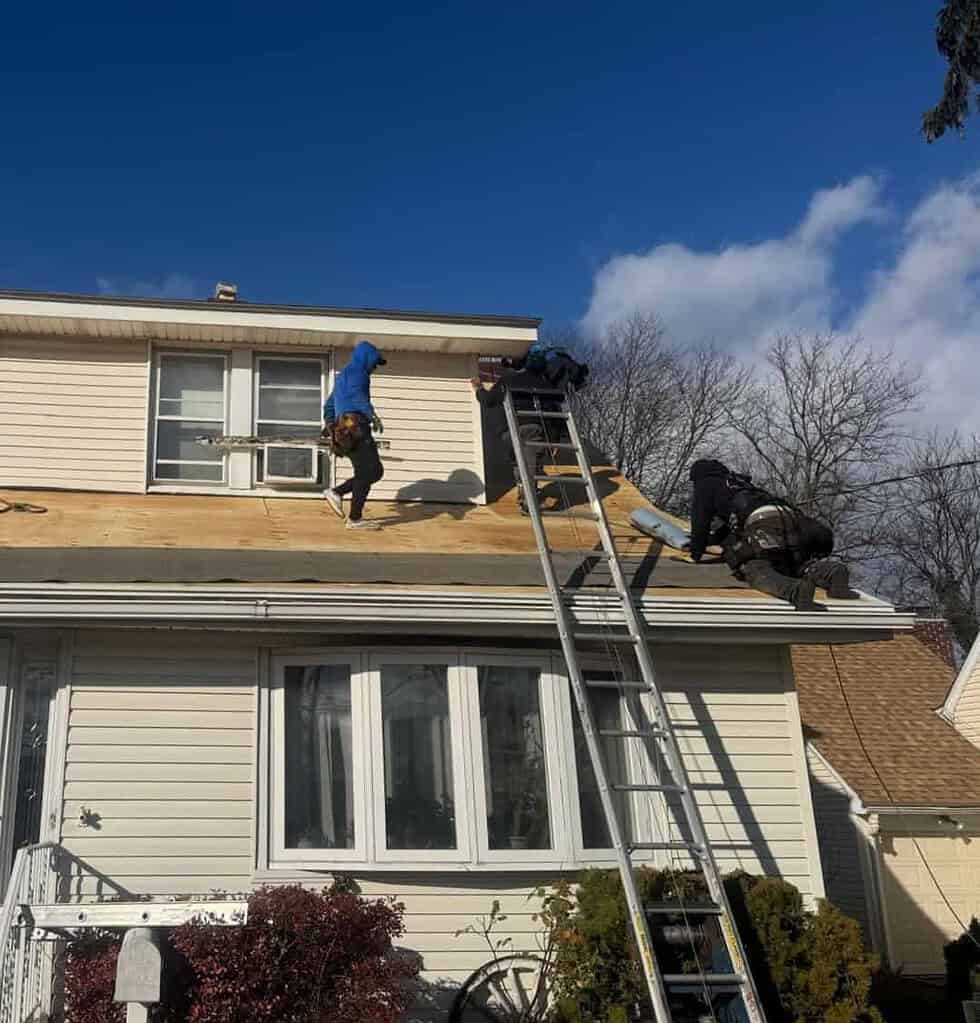
The ice barrier won’t stop an ice dam from forming. It keeps the water that backs up behind the dam from getting into your house. If your roof is due for replacement anyway, doing it in the fall means you get a full ice barrier and corrected ventilation before winter. Here’s what a new roof costs in NJ.
Skylights and ice dams
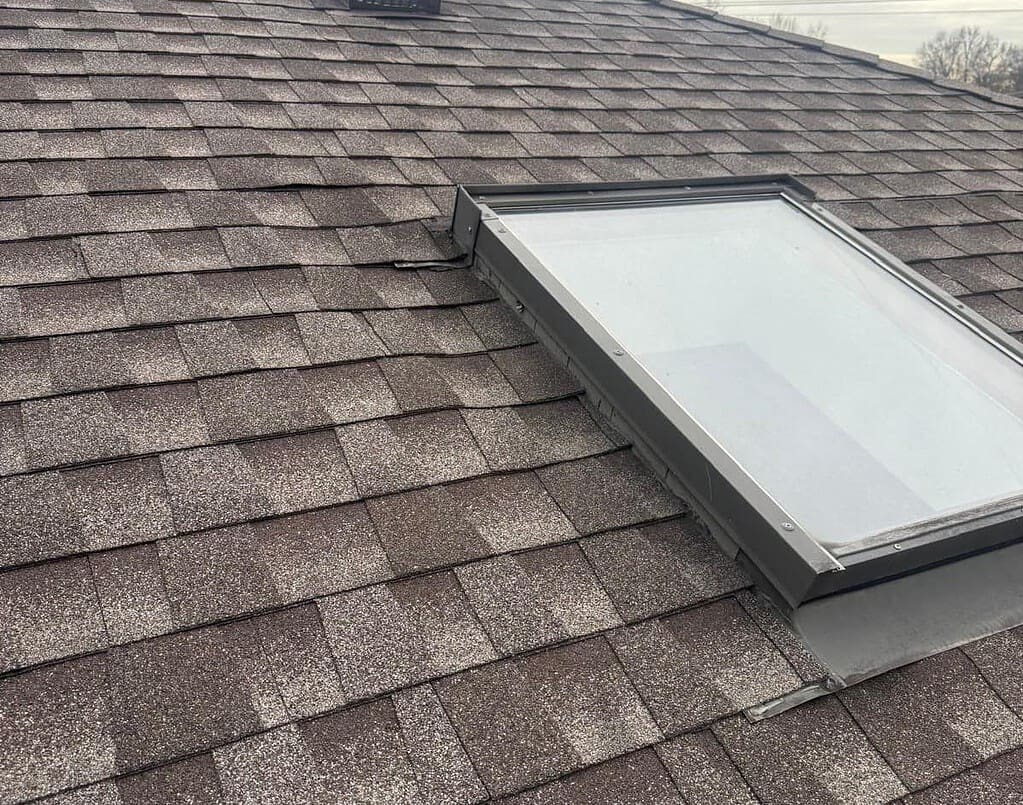
Skylights leak heat, so snow often melts right above them and refreezes just below. If you see ice or water stains at the bottom edge of a skylight in winter, the flashing and the insulation around the skylight shaft both need a look. Read more in our guide to leaking skylights.
What to do if you already have an ice dam
- Stay off the roof. Icy roofs are extremely dangerous, and walking on frozen shingles breaks them.
- Pull snow off from the ground with a roof rake. Clear the lower 3 to 4 feet of the roof so less water feeds the dam. Leave a thin layer so you don’t scrape the shingles.
- Never chip the ice with a hammer, shovel or axe. You will damage the shingles and gutters and make the leak worse.
- Melt a channel with calcium chloride, not rock salt. Fill a nylon stocking with calcium chloride ice melt and lay it across the dam so water can drain. Rock salt damages shingles, gutters and plants.
- If water is coming inside, catch it, move valuables, take photos for your insurance company, and call a roofer. We offer 24/7 emergency roof repair.
Heat cables can help at one known trouble spot, but they treat the symptom, not the cause. The heat leak is still there.
Does insurance cover ice dam damage?
Many homeowners policies cover sudden interior water damage from an ice dam, but not the cost of removing ice or fixing the underlying cause. Every policy is different, so check yours, and photograph the ice and any interior damage as soon as you see it.
Book a fall roof check before winter
We’ll look at your shingles, eaves, flashing, skylights and attic ventilation, and tell you honestly what needs attention before snow season and what can wait. Better Build Construction serves homeowners across Bergen, Passaic, Essex, Hudson, Morris, Union, Somerset, Sussex, Warren and Hunterdon counties. Call (201) 598-0336 or request a free quote.
About Better Build Construction
This guide was written by the roofing team at Better Build Construction, a family-owned roofing and exterior contractor based at 50 Lisbon St, Clifton, NJ 07013. We repair and replace roofs, flat roofs, siding and skylights for homes and businesses across North and Central New Jersey, with 24/7 emergency service. Licensed and insured. NJ HIC Reg. #13VH10432600
Sources: Green Building Advisor, “Prevent Ice Dams With Air Sealing and Insulation”; UMass Amherst Building and Construction Technology, “Preventing Ice Dams”; Fine Homebuilding, “Ice Barriers Explained”; International Residential Code section R905.1.2.
1 thought on “Ice Dams in New Jersey: How to Prevent Them Before Winter”