
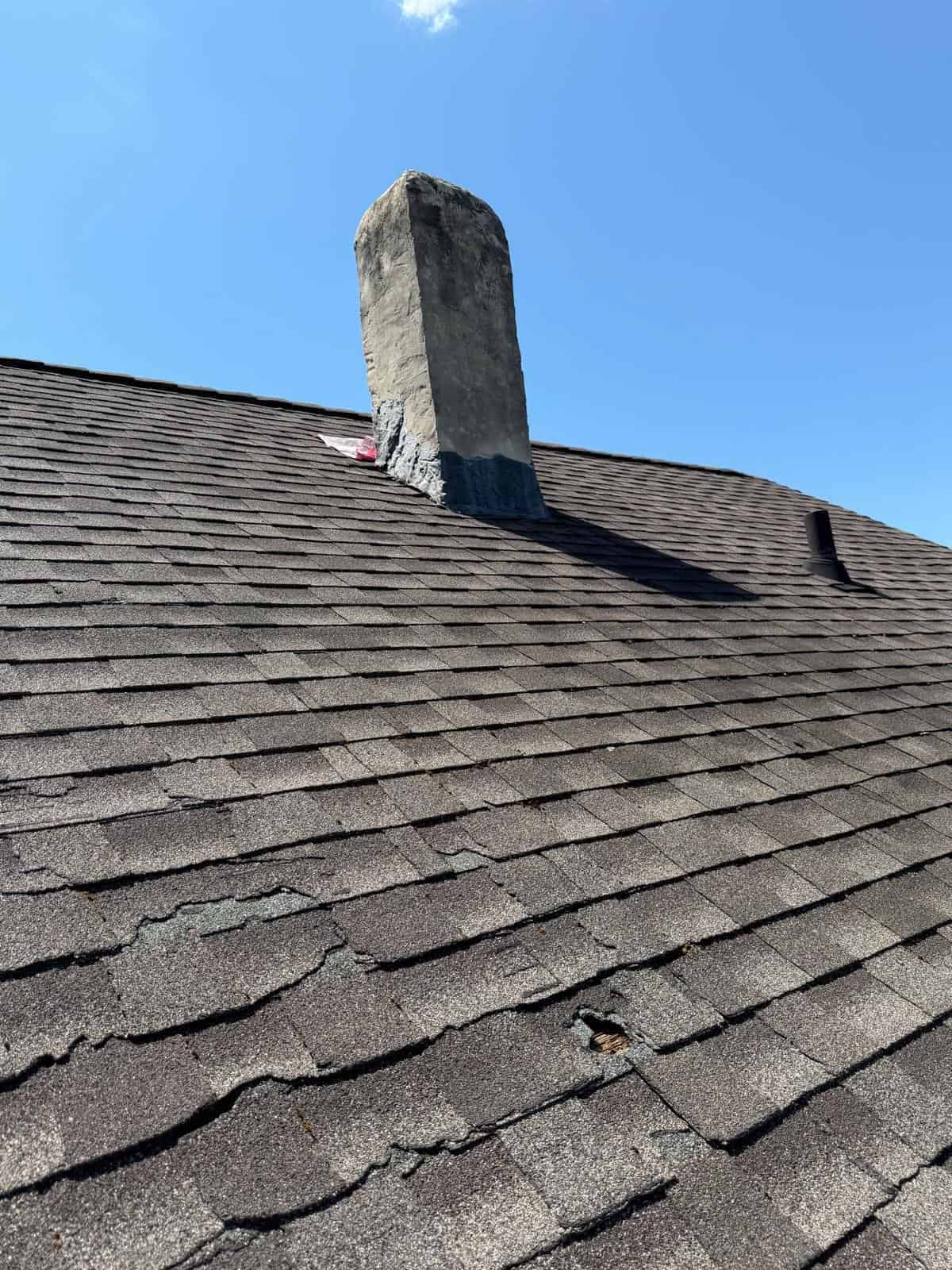
Short answer: most leaks around a chimney come from the flashing, the metal pieces that seal the gap between the roof and the chimney. Caulk and tar dry out, counter flashing pulls loose from the mortar, and water runs straight in. Cracked chimney crowns, porous brick and a missing “cricket” behind wide chimneys cause leaks too. According to AskTheBuilder, resealing flashing typically costs about $150 to $425 and full flashing replacement about $275 to $1,450. In New Jersey, repairs like this are also subject to sales tax.
How chimney flashing is supposed to work
A properly flashed chimney has several layers of metal working together:
- Step flashing: L-shaped pieces woven in with each row of shingles up the sides of the chimney.
- Counter flashing: metal cut into the mortar joints of the chimney that overlaps the step flashing, so water can’t get behind it.
- Front apron: a single piece across the downhill side of the chimney.
- Cricket (or saddle): a small peaked roof behind the chimney that splits water around it. The model residential code (IRC R1003.20) requires one when the chimney is more than 30 inches wide and doesn’t meet the ridge.
If any one of these is missing, worn out or replaced with a bead of caulk, water finds its way in.
Where is the water really coming from?
Where and when you see the water tells you a lot:
| What you see | Most likely source | Who fixes it |
|---|---|---|
| Stains on the ceiling or wall next to the chimney during wind-driven rain | Step or counter flashing | Roofer |
| Water on the uphill side of the chimney after heavy rain or snow | Missing or failed cricket, debris buildup | Roofer |
| Water inside the fireplace or firebox | Chimney crown, cap or flue | Mason or chimney sweep |
| Damp brick in the attic, even without rain | Porous brick or mortar, or condensation | Mason, sometimes both |
| Stains that appear after snow melts | Snow and ice sitting against the chimney | Roofer |
Why tar and caulk “fixes” keep failing
A lot of chimney leaks have already been “fixed” once, usually with roofing tar or caulk smeared along the chimney. Sealant is maintenance, not flashing. Sun and New Jersey’s freeze-thaw winters crack it within a few seasons, and the leak comes back.
The lasting fix is new step flashing woven into the shingles and new counter flashing cut into the mortar joints. Sealant is only the last touch, not the thing holding the water out.
Is it a roofer problem or a mason problem?
Both trades work on chimneys, so it helps to know which one to call:
- Roofer: flashing, crickets, and the shingles around the chimney.
- Mason or chimney sweep: the crown (the concrete top), the cap, cracked brick, crumbling mortar and the flue liner.
A good roofer will look at the whole chimney from the roof and tell you if part of the problem is masonry. Our team handles chimney flashing and chimney-related roof repairs, and one of our customers put it this way:
“Very responsive and professional. They were able to come out the same day to repair our chimney and provided excellent service at a fair price.”
Rebecca T.
How much does chimney flashing repair cost?
| Repair | Typical range | Notes |
|---|---|---|
| Reseal existing flashing | $150 – $425 | Only if the metal itself is in good shape |
| Replace chimney flashing | $275 – $1,450 | Larger chimneys and copper flashing cost more |
| Add a cricket | Quoted by size | Needed behind wide chimneys |
Ranges from AskTheBuilder. New Jersey labor typically runs higher than national averages.
Unlike a full new roof, repairs are taxable in New Jersey. The NJ Division of Taxation treats repair work on a home as a taxable service at 6.625%.
Replacing your roof? Replace the chimney flashing too
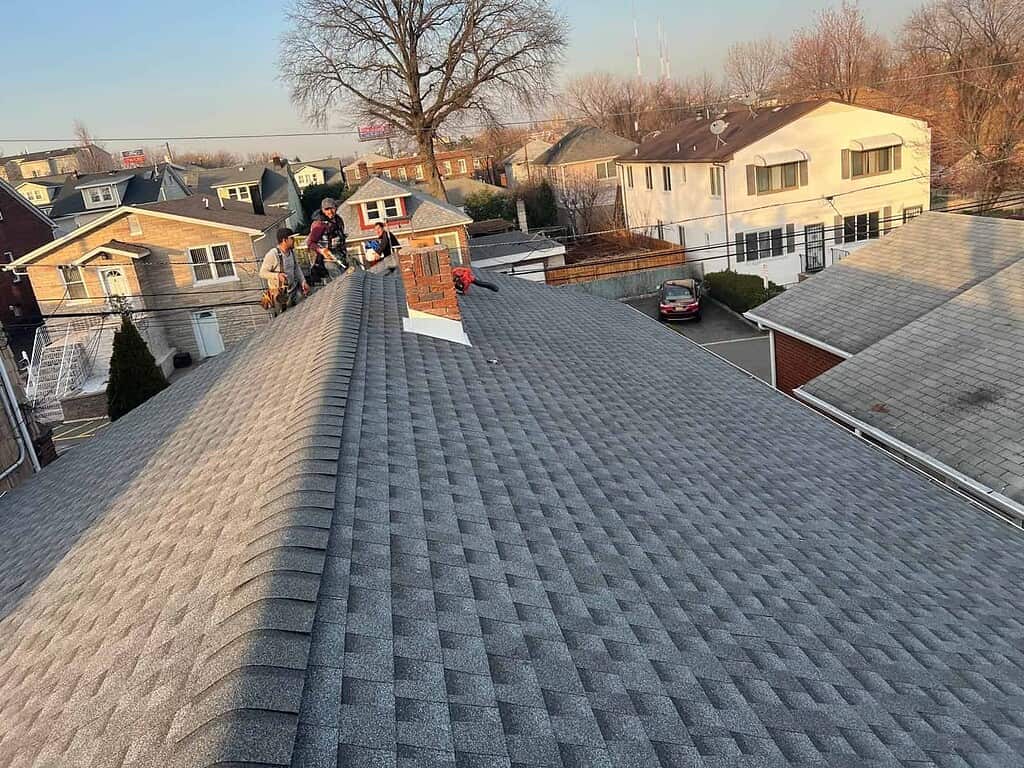
Old step flashing should never be reused under new shingles. It is bent, worn and cut to fit the old roof. A roof replacement is the cheapest time to install new step and counter flashing, and to add a cricket if the chimney needs one. See what a new roof costs in NJ.
Can I fix chimney flashing myself?
A homeowner can spot the problem from the ground with binoculars: missing metal, dried-out caulk, or shingles lifting next to the chimney. The repair itself means working on a roof, cutting into mortar and weaving flashing under shingles. Done wrong, it can make the leak worse. For most people this is a job for a pro.
What to do if it’s leaking right now
- Catch the water and move anything valuable away from the wall.
- Check the attic around the chimney with a flashlight and note where the wood is wet.
- Take dated photos for your records and your insurance company.
- Avoid using the fireplace until you know whether the chimney itself is involved.
- Call a roofer. For active leaks we offer 24/7 emergency roof repair.
Stop the leak at the source
We’ll find where the water is getting in and explain whether you need a flashing repair, a cricket, or a mason. Better Build Construction serves homeowners across North and Central New Jersey. Call (201) 598-0336 or request a free quote. Learn more about our roof leak repair service.
About Better Build Construction
This guide was written by the roofing team at Better Build Construction, a family-owned roofing and exterior contractor based at 50 Lisbon St, Clifton, NJ 07013. We repair and replace roofs, flat roofs, siding and skylights for homes and businesses across North and Central New Jersey, with 24/7 emergency service. Licensed and insured. NJ HIC Reg. #13VH10432600
Sources: AskTheBuilder, “Chimney Flashing Cost”; NJ Division of Taxation, Sales and Use Tax FAQ; International Residential Code section R1003.20.
1 thought on “Roof Leaking Around the Chimney? Causes, Repairs and Costs”